
Asphalt Footpaths Launceston
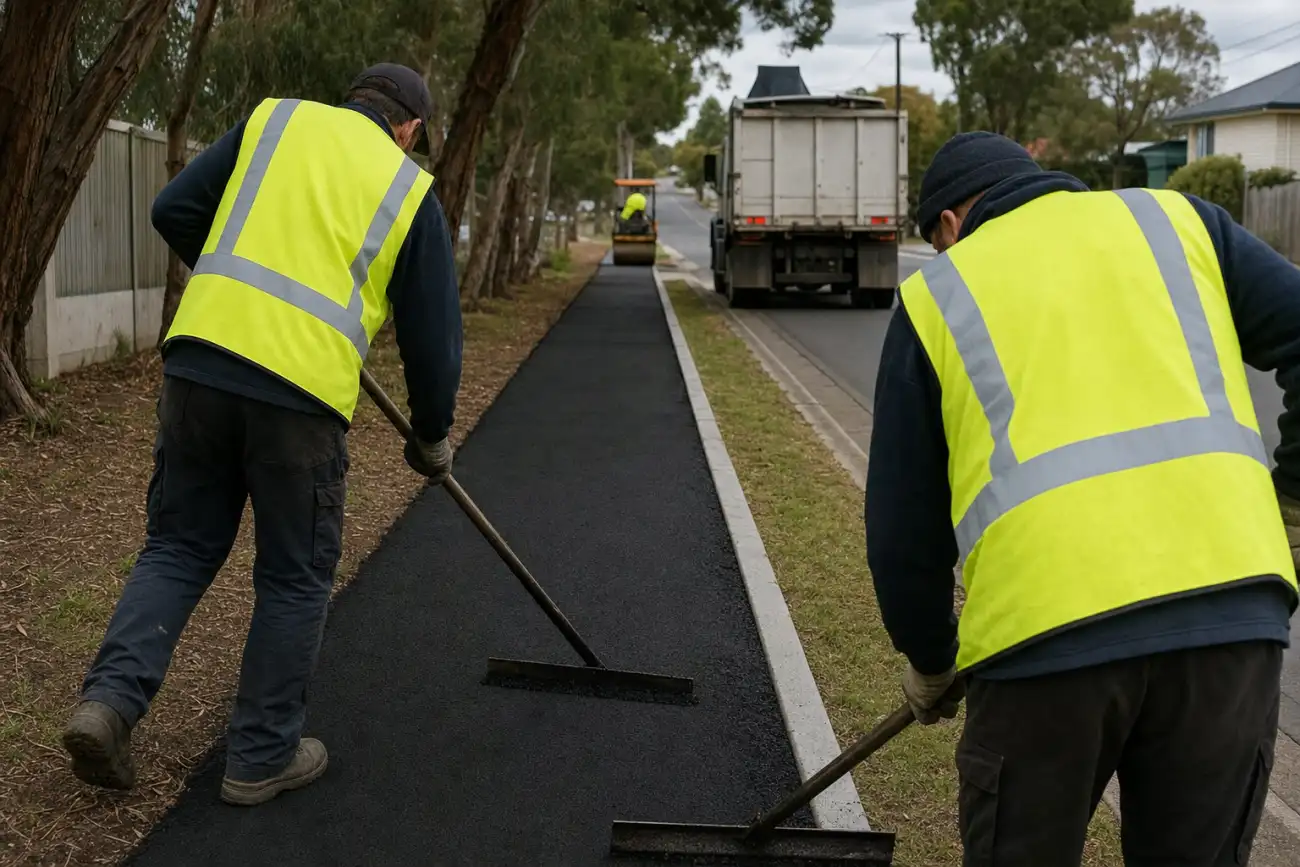
Footpaths and pathways take the most pedestrian wear of any asphalt surface, and need to be safe, flush, and slip-rated for foot traffic.
We do footpath construction and reinstatement for City of Launceston, residential side-passage paths, school path work, public walkways and small commercial entry zones. Asphalt or concrete depending on the application.
The right finish for a footpath isn't a driveway finish, different mix design, different compaction approach, different slip rating requirements. We get the spec right for the foot-traffic use case.
Why it matters
- Slip-rated surface, important for wet-weather pedestrian safety
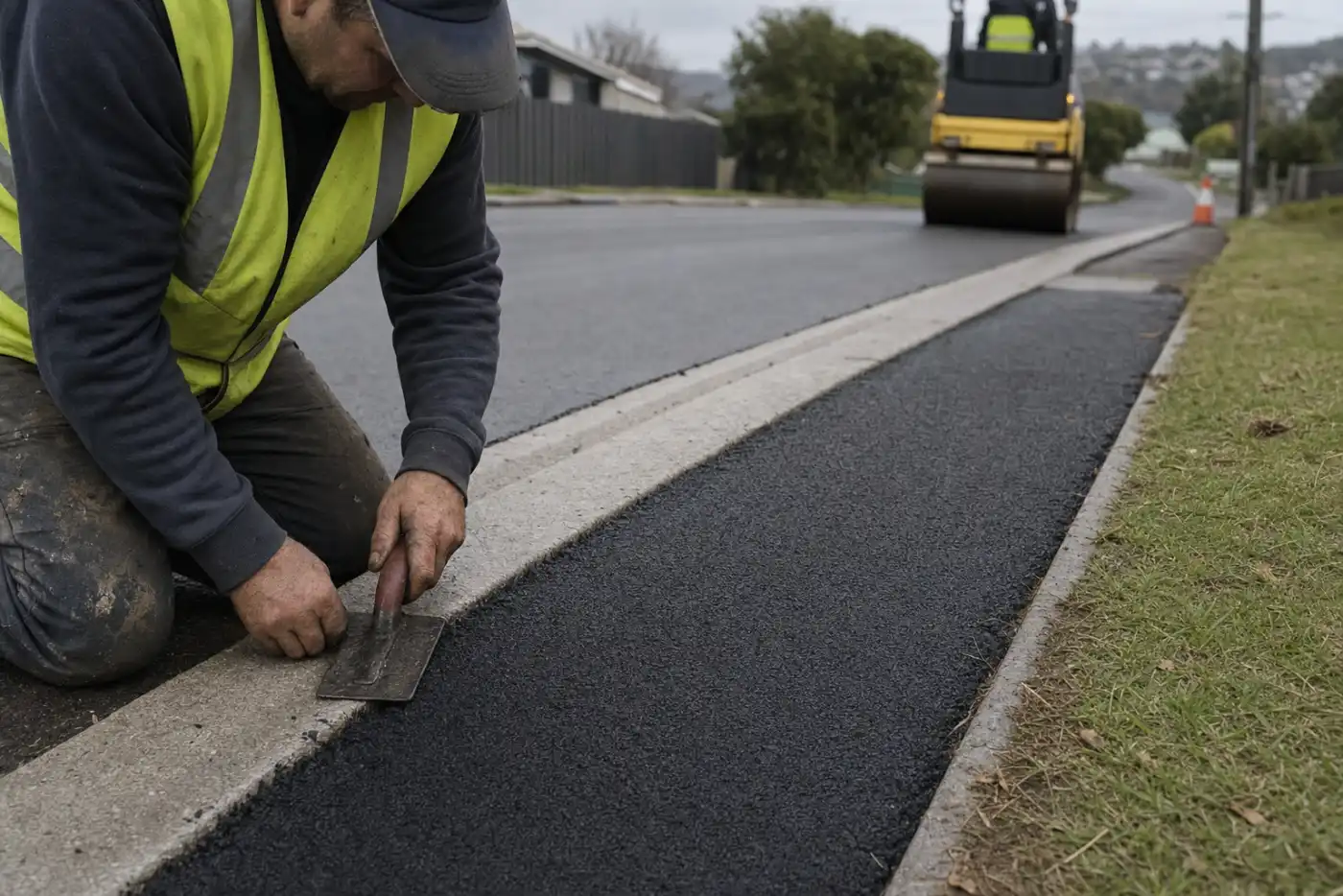
- Flush join with existing surfaces, no tripping hazard
- DDA-compliant where required (footpath gradient, transition zones)
- Quick turnaround for council reinstatement work
THE PROCESS
How we do it
Measure + scope
On-site measure, check gradient + width requirements, confirm spec.
Sub-base prep
Strip and compact road-base sub-base, set falls (1:50 typical for footpaths).
Edge formwork
Timber edge forms where the path abuts soft ground.
Lay + screed
Hand-screed or small paver, depending on path length and access.
Compact + finish
Pedestrian-mix asphalt compacted to slip-safe profile. Surface broom-finish for grip.
Sign off
Cured and walkable within hours of lay.
COMPARISON
How it stacks up
Pathways come in a few finishes. The right one depends on traffic type, accessibility requirements and budget.
| Feature | Asphalt footpath | Concrete footpath | Block paving |
|---|---|---|---|
| Cost per m² | Lowest | Mid | Highest |
| Lifespan | 20-25 years | 40+ years | 30+ years if maintained |
| Wheelchair / pram smoothness | Excellent when new | Excellent always | Vibration over joints |
| Trip hazard risk | Lowest | Lowest | Higher if blocks shift |
| Repair if damaged | Easy, blends | Hard, panels show | Easy, re-lay blocks |
| Tree-root tolerance | Better, flexes slightly | Cracks under root pressure | Lifts at the root site |
| Council DDA compliance | Yes, when laid flat | Yes, when laid flat | Check with council |
AFTERCARE
Looking after the footpath
Footpaths are low-maintenance once down. The two things that kill them are tree roots and edge erosion. Watch both.
Trim adjacent trees
If a deciduous tree is within 3 metres of the path, expect roots to lift the asphalt within 5-10 years. Prune the surface roots before they cause uplift, or budget for a re-pour at the root site.
Watch the edges
Footpath edges that drop off into grass or garden bed can erode underneath if water runs along them. Check for any soft spots after heavy rain. Top up with crushed gravel if needed.
Crack sealing
Hairline cracks at year 8-12 are normal. Seal them before they widen. About $3-5 per linear metre.
Annual sweep
Sweep the path clear of leaves and debris in autumn. Decomposing organic matter holds moisture against the asphalt and accelerates aging.
PRICING
What it costs in Launceston (2026)
- $Standard 1.2m wide footpath, asphalt: $55–$85/m² supplied and laid
- $Wider 1.5m+ council standard: $50–$75/m²
- $Concrete footpath: $90–$140/m² supplied and laid
- $Side-passage residential paths (under 10m²): typically $1,200–$2,200 minimum job
- $Council reinstatement work: priced per linear metre, varies by council
Site-specific factors change every quote. Get the price in writing before you sign anything.
FAQ
Footpaths & Pathways, common questions
Can you do a concrete footpath instead of asphalt?+
Yes, both options available. Concrete lasts longer (40+ years vs 25 for asphalt) but costs more. Asphalt is easier to repair and faster to lay. We quote both in the same site visit.
What slip rating do you finish footpaths to?+
R10–R11 wet for residential, R11 for council/commercial. We adjust the finish (broom direction, aggregate exposure) to hit the required rating.
Can you do a wheelchair-accessible footpath?+
Yes, DDA-compliant gradient and transition zones. We work to AS 1428.1 for the access path standard.
Do you do footpath repair, or only new builds?+
Both. Small section repairs are usually $300–$700. Full panel replacement (concrete) or section overlay (asphalt) costs more, depends on size and access.
Do you handle council footpath approval?+
For council footpath works on the road reserve, council manages their own approvals. For residential side-passage paths within your boundary, no approval needed.
READY TO START?
Get a free quote
We come out, have a look, give you a real number in writing within 48 hours. No mucking around, no obligation.