
Sealing vs Replacing: When Your Tassie Driveway Just Needs a Re-seal vs a Full Re-do
AI Overview
There are three repair levels for an aging asphalt driveway and choosing the right one saves thousands. Seal coat ($3-8/m²) for cosmetic refresh and to add 5+ years of life. Overlay ($30-45/m²) when the surface is failing but base is sound. Full strip-and-replace ($60-90/m²) when the base has failed. Picking too cheap an option means redoing it in 2 years; picking too expensive means spending money you didn't need to.
Key Highlights
- →Seal coat ($3-8/m²): cosmetic + adds 5-7 years to surface life
- →Overlay ($30-45/m²): fixes surface failure when base is still sound
- →Strip-and-replace ($60-90/m²): only when base has failed
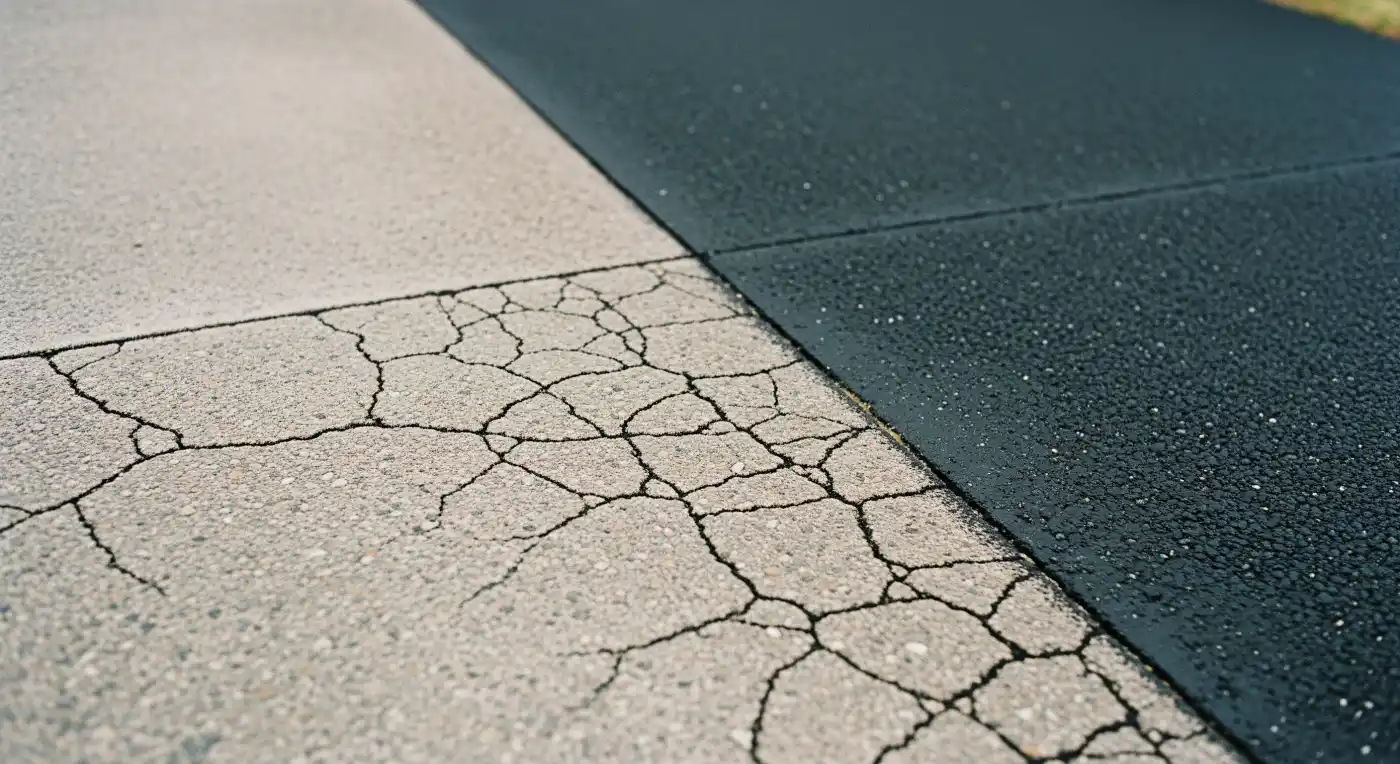
- →Surface cracking under 3mm = sealable. 3mm+ = not
- →Rutting, edge crumbling, base movement = base has failed, no overlay will save it
- →Age alone isn't the test — condition is
When your driveway starts looking tired, the question isn't 'how long do I have' — it's 'what level of repair does it actually need'. A driveway that just needs a $400 seal coat doesn't need a $6,000 replacement. A driveway that needs a strip-and-replace will fail any overlay you put on it in two years.
This guide walks through the diagnostic logic. Read it, then walk your driveway with a phone in hand and check off what applies.
The three repair levels at a glance
| Repair | Cost/m² | Lifespan added | When to use |
|---|---|---|---|
| Seal coat | $3-8 | 5-7 years | Surface oxidation, hairline cracks, fading |
| Overlay (25mm) | $30-45 | 10-15 years | Surface failure, sound base |
| Strip-and-replace | $60-90 | 20-25 years | Base failure, rutting, edge collapse |
Check 1: Cracks
Walk the driveway. Are the cracks hairline (under 1mm wide)? If yes, a seal coat fills and protects them. Cracks between 1-3mm wide? Crack-seal first, then overlay. Cracks 3mm+ or with vertical movement on either side? Base has shifted, overlay won't last.
Check 2: Rutting
Look for depressions in the tyre tracks where you regularly drive. Standing water after rain in those tracks is the giveaway. If you've got rutting, the base is moving. A seal coat or overlay will just follow the ruts. Strip-and-replace is the only real fix.
Check 3: Edge crumbling
Walk the edges of the driveway. Are the edges still sharp and supported? Or are they crumbling away into the grass? Crumbling edges = no edge restraint = base prep was bad. An overlay won't restore edge support; you need to strip-and-replace with proper edge work.
Check 4: Surface oxidation
Asphalt fades from black to grey over years as the bitumen binder oxidises in UV. Grey, dry-looking surface with no cracking = perfect candidate for a seal coat. Quick, cheap, looks like new for another 5-7 years.
Check 5: Pothole density
One or two isolated potholes in an otherwise sound driveway = patch them, then seal coat. Multiple potholes appearing across the surface = base has failed in multiple places. Patching them all is throwing money at a strip-and-replace situation.
Putting it together: the decision flow
- Surface looks faded but is structurally sound, no cracks > 1mm, no rutting → seal coat
- Surface has cracks 1-3mm but base is intact, no rutting or edge collapse → overlay (25mm)
- Cracks 3mm+, rutting in tyre tracks, edge crumbling, base movement → strip-and-replace
- Mostly sound with localised pothole damage → patch the potholes, then seal coat the rest
Get a second opinion before strip-and-replace
Strip-and-replace is the most expensive option. Before committing, get a second contractor out to assess. Honest contractors will recommend the cheapest treatment that actually solves the problem, not the most expensive one they can sell you.
FAQ
Common questions
How long should I wait between seal coats?+
First seal coat at year 2-3 (for new asphalt), then every 5-7 years after that. Coastal Riverside / Devonport properties can go 4-5 years between seals because the salt air speeds up surface oxidation.
Will a seal coat fix the look of an oil stain?+
Mostly. Heavy oil stains can bleed through a single coat. Best practice is to scrape and clean the stain, apply a stain-block primer to that area, then seal coat the whole driveway.
What time of year is best for seal coating in Tasmania?+
Late spring and early autumn. The asphalt needs to be warm enough for the seal to bond properly (above 15°C), but not so hot it cures too fast. October-November or March-April are ideal in Launceston.
Can I DIY a seal coat?+
Yes for a small driveway, no for anything over about 50m². DIY seal coats from hardware stores work but apply unevenly without proper equipment. The result is a streaky finish that needs to be done again sooner. Contractor seal coat on a 50m² driveway runs about $300-500 — not a lot of money for a 10-year benefit.

Got a job? Get a quote.
Free site visit, real prices, quote in writing within 48 hours.